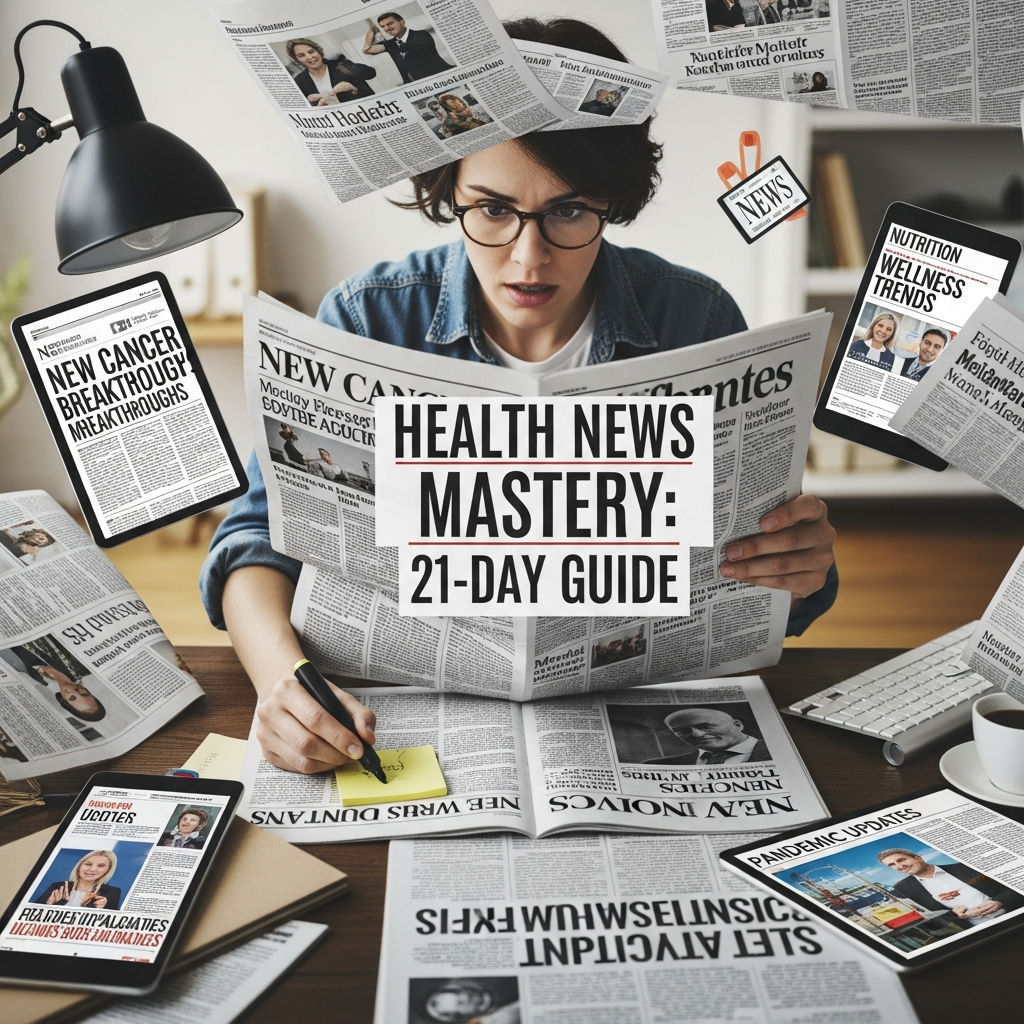
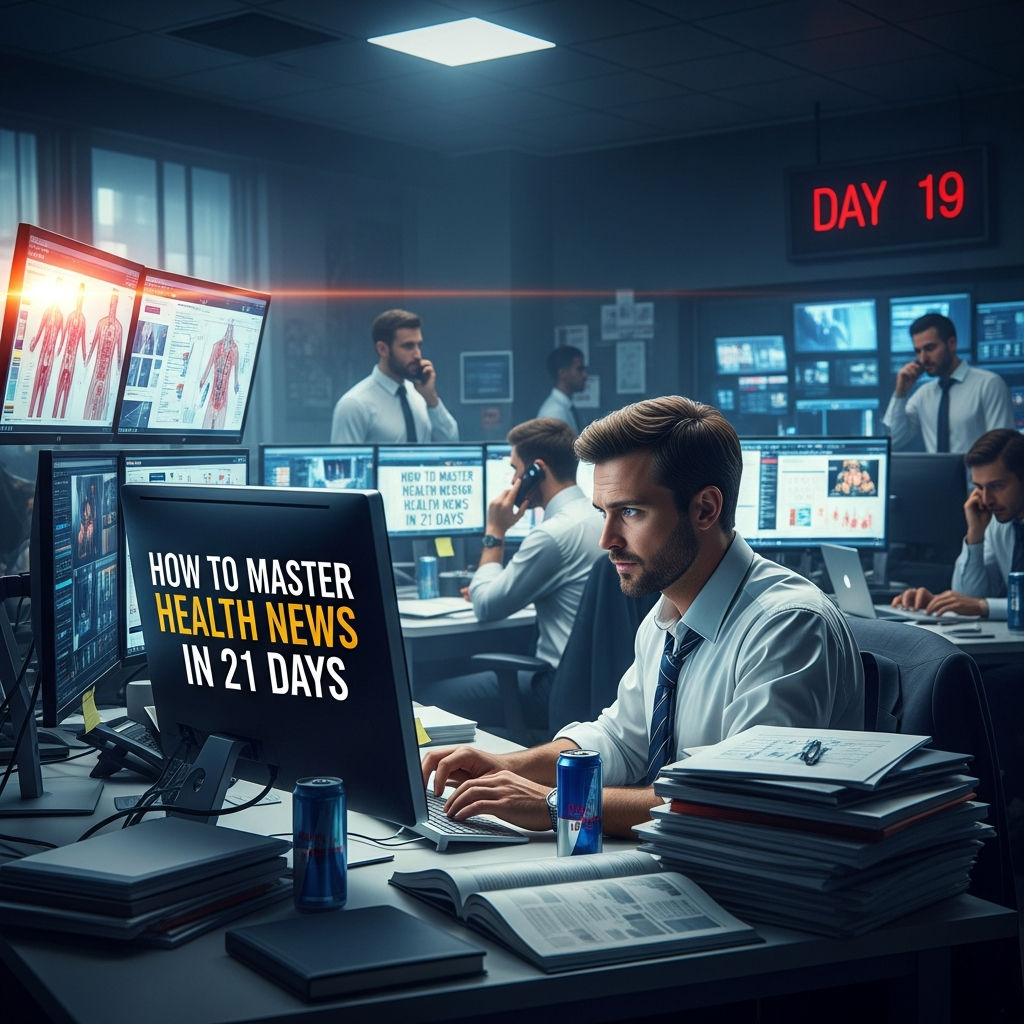
How to Master Health News in 21 Days: A Practical Guide to Health Literacy
In an era where information travels faster than ever, the average person is bombarded with thousands of health-related headlines every year. One day, coffee is a miracle elixir; the next, it is a potential carcinogen. This constant fluctuation leads to what experts call “information fatigue,” leaving many people confused, anxious, and skeptical of science altogether. However, mastering the art of consuming health news is not a skill reserved for doctors or researchers. It is a form of literacy that anyone can develop.
The goal is not to become a medical expert, but to become a critical consumer. By following this 21-day roadmap, you will learn how to filter out the noise, identify credible evidence, and apply health news to your life without the stress of misinformation. Here is how you can master health news in just three weeks.
Week 1: Building Your Filter and Clearing the Noise
The first seven days are about detoxing from “junk” information and setting up a foundation of high-quality sources. Most people consume health news passively through social media feeds, which are optimized for engagement (often through fear or excitement) rather than accuracy.
Day 1-3: Identify the Red Flags
Start by auditing your current information sources. If a headline uses “miracle,” “secret,” or “doctors hate this,” it is likely sensationalism. During these first three days, practice spotting these red flags:
- Sensationalist Headlines: Claims that seem too good (or too bad) to be true.
- Lack of Citations: Articles that mention “a new study” without linking to the original research.
- Commercial Bias: Content written primarily to sell a supplement or a specific diet program.
Day 4-5: Curate a High-Quality Feed
Replace low-quality sources with “Gold Standard” institutions. During these days, follow or bookmark sources known for rigorous fact-checking. These include the Mayo Clinic, Johns Hopkins Medicine, the Cochrane Library, and reputable peer-reviewed journals like The Lancet or the New England Journal of Medicine (NEJM). These organizations prioritize evidence-based medicine over clicks.
Day 6-7: The Social Media Detox
Unfollow “wellness influencers” who provide medical advice without credentials. While they may have aesthetic appeal, their advice is often anecdotal and lacks scientific backing. Use these two days to ensure your digital environment is curated for accuracy rather than popularity.
Week 2: Decoding the Science and the Numbers
Once you have curated your sources, the second week focuses on understanding the “how” and “why” behind health studies. You don’t need a PhD to understand the basics of scientific methodology.
Day 8-10: Understanding the Hierarchy of Evidence
Not all studies are created equal. Mastering health news requires knowing which types of research carry the most weight. Practice identifying these three levels:
- Meta-analyses and Systematic Reviews: These are the “gold standard” because they look at dozens of studies to find a consensus.
- Randomized Controlled Trials (RCTs): These test a specific intervention against a control group and are highly reliable.
- Animal or In-Vitro Studies: While interesting, “mice studies” rarely translate directly to human health. If a headline fails to mention the study was done on rodents, be skeptical.
Day 11-12: Correlation vs. Causation
This is perhaps the most important lesson in health literacy. Just because two things happen at the same time doesn’t mean one caused the other. For example, a study might find that people who eat more blueberries live longer. This is a correlation. However, those people might also exercise more and have higher incomes. Mastering health news means looking for the “confounding variables” before jumping to conclusions.
Day 13-14: Absolute vs. Relative Risk
Headlines often use “Relative Risk” to sound more dramatic. If a news story says a certain food “doubles your risk of heart disease,” that sounds terrifying. This is the relative risk. However, if your original risk was 1 in 10,000, doubling it makes it 2 in 10,000. That is the absolute risk, and it is still incredibly low. Always look for the absolute numbers to maintain perspective.
Week 3: Personal Application and Sustainable Habits
In the final week, the focus shifts from understanding the news to applying it to your own life in a healthy, productive manner.
Day 15-17: The Actionability Filter
Before you change your lifestyle based on a news report, ask yourself: “Does this apply to me?” A study on 20-year-old elite athletes may not be relevant to a 50-year-old office worker. Consider your age, genetics, current health status, and lifestyle. Most health news is meant to contribute to a broader body of knowledge, not to serve as an immediate prescription for every individual.
Day 18-19: How to Talk to Your Doctor
The goal of mastering health news is to become a better partner with your healthcare provider. Use these days to learn how to bring news to your doctor. Instead of saying, “I read that I should take this supplement,” try saying, “I saw a recent study in [Source] regarding [Topic]; based on my health history, is this something we should consider?” A health-literate patient uses news as a conversation starter, not a self-diagnosis tool.
Day 20: Beware of “Single-Study Syndrome”
Science is a slow, iterative process of building consensus. No single study ever “settles” a health debate. On Day 20, practice looking for “scientific consensus.” If one study says eggs are bad, but 50 other studies over the last decade say they are fine in moderation, trust the weight of the collective evidence rather than the outlier.
Day 21: Establishing a 15-Minute Routine
On your final day, consolidate your new skills into a sustainable habit. You don’t need to read health news for hours. A 15-minute daily check-in with a trusted aggregator (like the New York Times Health section or Harvard Health Blog) is enough. You have now moved from being an overwhelmed consumer to an empowered, health-literate individual.
Conclusion: The Power of Health Literacy
Mastering health news in 21 days isn’t about memorizing medical terminology; it is about developing a skeptical but open-minded framework for processing information. In a world where “fake news” can have life-or-death consequences, the ability to discern credible evidence is one of the most important survival skills of the 21st century.
By the end of this three-week journey, you will find that the headlines no longer control your emotions. You will be able to read a sensational claim, identify the study type, check the source, and decide—with confidence—whether it warrants a change in your behavior or belongs in the digital trash can. True health mastery starts with a clear mind and a critical eye.