The Complete Checklist for Health News: How to Spot Reliable Medical Information
In an era where information is available at the click of a button, staying informed about your health has never been easier. However, this accessibility comes with a significant challenge: the “infodemic.” Every day, thousands of health-related articles, social media posts, and news segments compete for our attention. Distinguishing between a breakthrough medical discovery and a sensationalized headline is a critical skill for the modern consumer.
Health literacy—the ability to find, understand, and use health information—is directly linked to better health outcomes. When we consume inaccurate health news, we risk making poor lifestyle choices, wasting money on unproven supplements, or, in extreme cases, delaying life-saving medical treatment. This complete checklist for health news is designed to help you navigate the noise and identify evidence-based medical reporting.
1. Evaluate the Source of the News
The first step in any health news checklist is identifying where the information originated. Not all platforms have the same standards for fact-checking and scientific rigor.
- Is it a reputable news outlet? Established organizations like the Associated Press, Reuters, or the New York Times often have dedicated science and health reporters who understand how to interpret data.
- Is it a medical or government institution? Sources like the CDC, the World Health Organization (WHO), the Mayo Clinic, and the National Institutes of Health (NIH) are gold standards for public health information.
- Check the domain: Websites ending in .gov, .edu, or .org (from established non-profits) are generally more reliable than .com sites, which may have a commercial bias.
2. Check for Primary Research and Peer Review
A credible health article should always point back to the original source of the data. If an article makes a bold claim without mentioning a specific study, be skeptical.
- Was it published in a peer-reviewed journal? Peer review is a process where independent experts evaluate a study before it is published to ensure its methodology is sound. Journals like The Lancet, JAMA, and the New England Journal of Medicine are highly prestigious.
- Beware of “Pre-prints”: During the COVID-19 pandemic, pre-prints became common. These are studies released before peer review. While they provide fast information, they have not yet been vetted by the scientific community.
- Look for the link: A high-quality digital health article will provide a direct link to the original study or the journal’s abstract.
3. Analyze the Type of Study Conducted
Not all scientific evidence is created equal. The “hierarchy of evidence” helps us understand how much weight to give a specific health claim. This is a vital part of any checklist for health news.
- Human vs. Animal Studies: Many headlines shout about a “cure for cancer” that was actually only tested on mice or in a petri dish (in vitro). Results in animals do not always translate to humans.
- Sample Size: Did the study involve 10 people or 10,000? Small studies are more likely to produce results that happen by chance. Large-scale studies provide more reliable data.
- Randomized Controlled Trials (RCTs): This is the “gold standard.” It means participants were randomly assigned to either a treatment group or a control group.
- Observational Studies: These look at patterns in populations (e.g., “People who drink coffee live longer”). They show correlation, not causation. Drinking coffee might be linked to longevity, but it doesn’t prove coffee is the cause.
4. Scrutinize the Headline and Language
Headlines are designed to get clicks (clickbait), and often, the headline writer is not the person who wrote the article. This can lead to a disconnect between the catchy title and the actual science.
- Does the headline use “Miracle,” “Secret,” or “Cure”? Science rarely moves in “miracles.” Progress is usually incremental. Extreme language is a major red flag for misinformation.
- Does the article use “may” or “could” versus “will”? Responsible health journalism uses cautious language because scientists are rarely 100% certain. If an article promises a guaranteed result, be wary.
- Is it an anecdote? Personal stories about one person’s “miraculous recovery” are compelling, but they are not scientific evidence. An anecdote is a sample size of one.
5. Identify Potential Conflicts of Interest
Always ask: “Who paid for this study?” and “Who benefits from this news?” Financial interests can subtly influence how results are reported.
- Check the funding: If a study claiming dark chocolate improves heart health was funded by a major candy corporation, the results should be viewed with extra scrutiny.
- Look for “Sponsored Content”: Some health articles are actually “advertorials”—ads designed to look like news stories. Check for labels like “Promoted” or “Sponsored.”
- Are they selling something? If a health news site immediately directs you to buy a specific supplement or program to “solve” the problem mentioned in the article, it is likely a marketing tool rather than an objective news source.
6. Cross-Reference with Scientific Consensus
Science is a collaborative, ongoing process. A single study rarely changes the entire landscape of medical practice overnight. One of the most important steps in your checklist for health news is checking the broader context.
- Does this contradict established science? If a new article claims that smoking is actually good for your lungs, it is almost certainly false. Extraordinary claims require extraordinary evidence.
- Look for “Consensus Statements”: Major medical organizations often release consensus statements that summarize the current state of knowledge on a topic based on hundreds of studies.
- Check fact-checking sites: Websites like HealthFeedback.org or FactCheck.org often debunk viral health myths and explain the nuances of trending medical news.
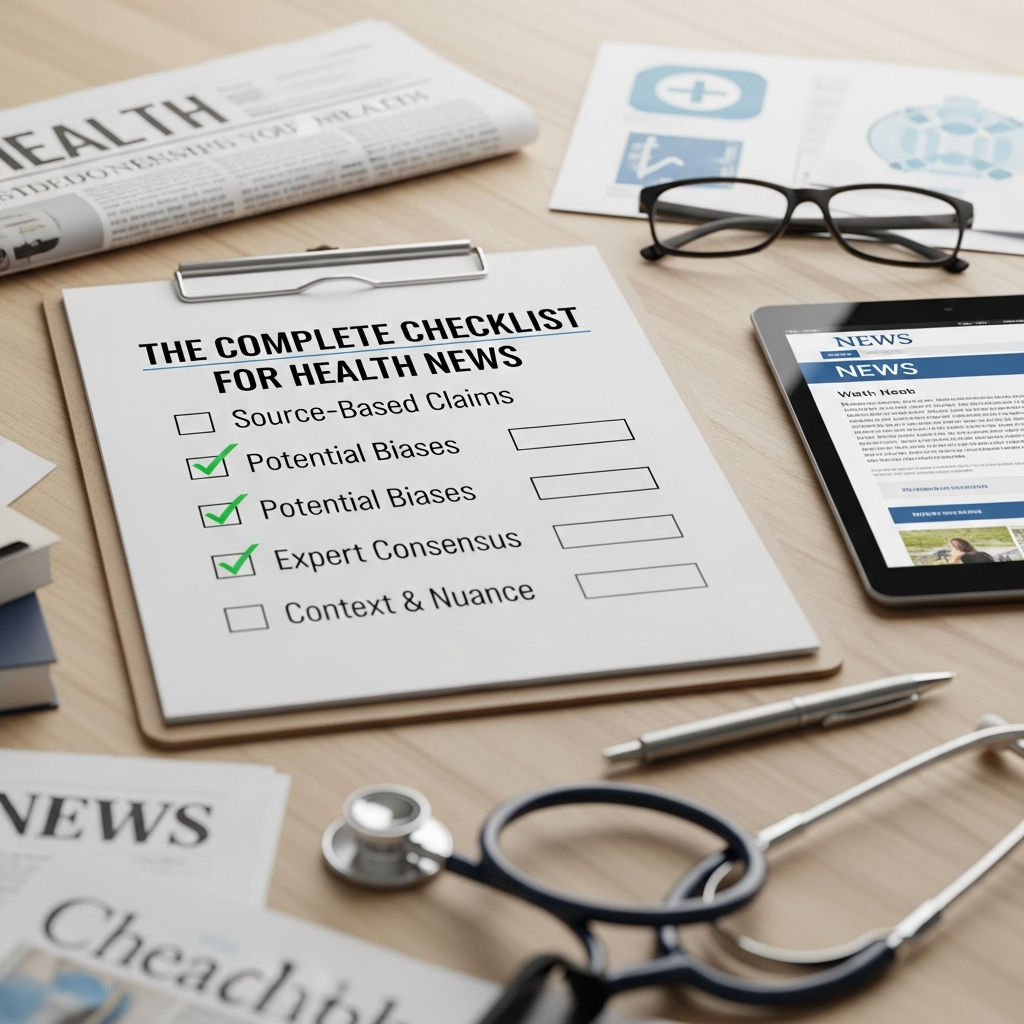
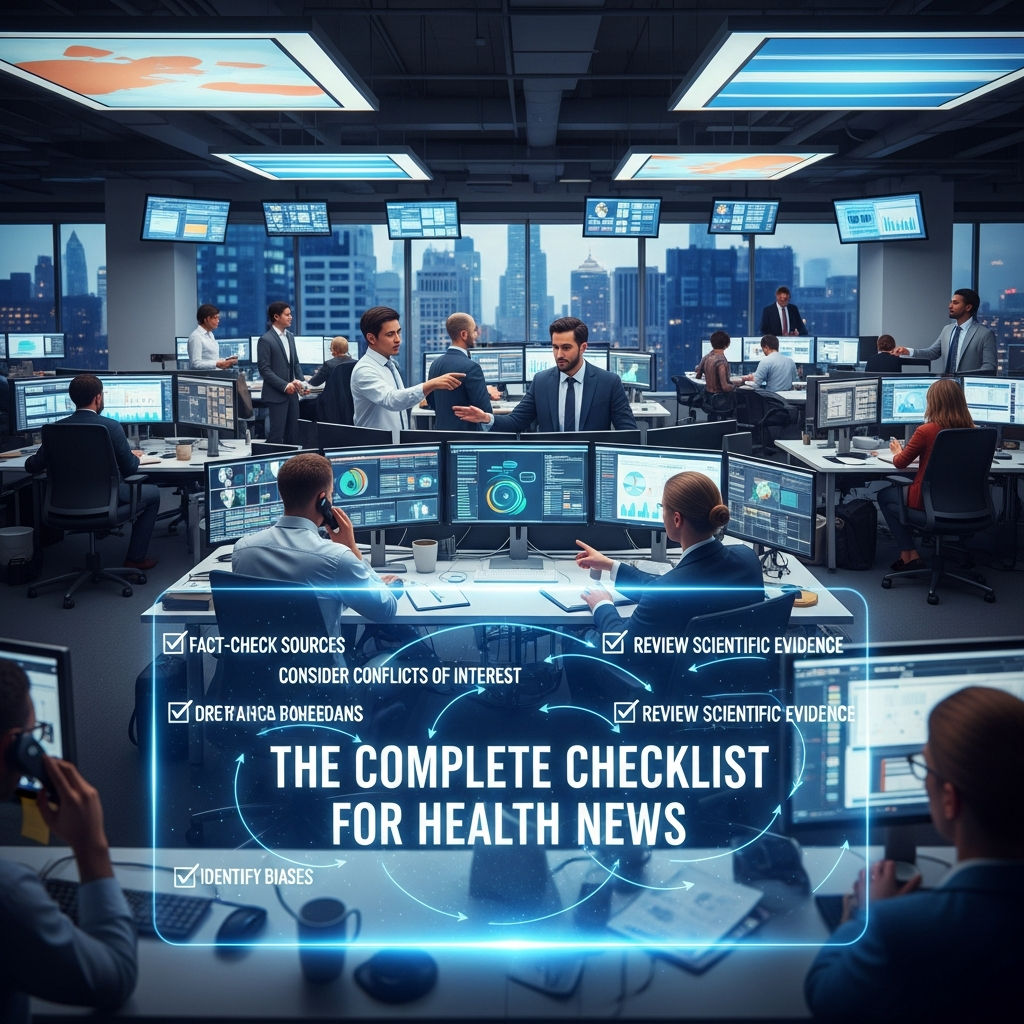
7. The Health News Checklist Summary
To make it easier for your daily browsing, here is a quick-reference checklist you can use whenever you encounter a health claim:
- [ ] Is the source a reputable medical institution or news outlet?
- [ ] Is there a link to the original peer-reviewed study?
- [ ] Was the study conducted on humans (rather than animals or cells)?
- [ ] Is the sample size large enough to be meaningful?
- [ ] Does the article distinguish between correlation and causation?
- [ ] Is the language cautious rather than sensational?
- [ ] Did the author disclose any financial conflicts of interest?
- [ ] Does the information align with the general scientific consensus?
- [ ] Was the study published recently (within the last 5–10 years)?
Final Thoughts: Consultation Over Consumption
While staying informed is valuable, the internet should never replace the advice of a qualified healthcare professional. Health news often focuses on “averages” and general populations, but your health is individual. Factors like your genetics, medical history, and current medications change how medical information applies to you.
Use this checklist for health news to filter out the noise, but always bring the “news” to your doctor before making changes to your diet, exercise routine, or medication. By becoming a discerning consumer of health information, you empower yourself to make decisions based on facts rather than fear or marketing hype.